Rape culture
Shrill: Notes from a Loud WomanRape culture, as Lindy West uses the term, describes the social conditions that normalize sexual violence, excuse or minimize it, and make survivors bear the cost of being disbelieved or blamed. Her account treats comedy not as a sealed-off realm of harmless performance but as one place where those conditions are reflected and reinforced. The argument turns on a distinction: a joke may be framed as ironic, yet its meaning and effects are shaped by an existing culture in which assault is underreported, survivors face suspicion, and women are routinely reminded of their vulnerability.
Meaning and Social Context
West argues that feminist criticism of rape jokes is not based on the idea that rape is uniquely beyond discussion, while other crimes are fair game. The distinction is contextual. In her description, public life repeatedly narrows the definition of sexual assault, recasts stalking as romance, blames victims for their clothing or choices, and treats false accusations as a more urgent concern than actual assaults. The social and emotional costs of reporting can be prohibitive, and fewer than five percent of rape cases that go to trial result in conviction. Against that background, the insistence that everyone already knows rape is wrong does not settle what a joke communicates or whom it places at risk.
For West, ironic intent is not enough to make a victim-targeting joke harmless. The claim that an audience will automatically recognize the intended distance between a performer and a character assumes that the wider culture already takes assault seriously. She counters that assumption with the prevalence of unreported assaults and the persistent tendency to discredit those who speak about them. Her focus is therefore not only on what a comedian means, but also on what a joke makes easier to dismiss and what it signals to people who encounter it in a culture where their safety is already treated as debatable.
Comedy, Responsibility, and Target
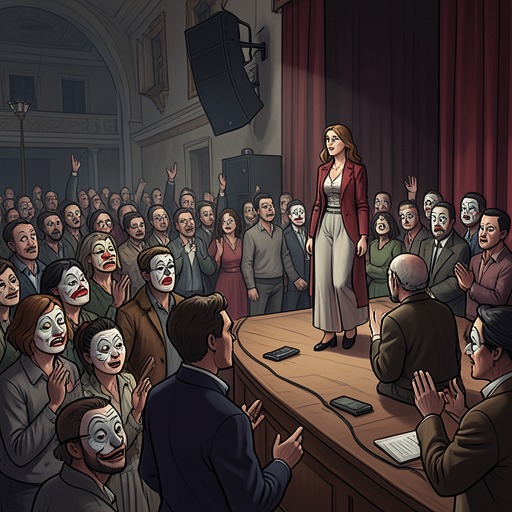
The dispute arose in a debate about Daniel Tosh’s rape-joke incident at the Laugh Factory. West’s broader case is that comedy is both a reflection of social attitudes and a force that can help shape them. She points to comedy’s reach in public life and asks how a joke’s target changes its meaning: mocking rapists or rape culture is different from making victims the object of amusement. The question, in her framing, is not whether speech should be forcibly prohibited. It is a question of choice and accountability: comedians decide where to aim, and audiences and communities can decide which ideas they will accept.
West recognizes the defense that Tosh performs a deliberately disturbing persona and that listeners understand the act as a performance. She argues that this defense depends on treating opposition to rape as universal and self-evident. For women who move through the world under the threat of sexual violence, and for people involved in anti-rape activism, that premise cannot simply be taken for granted. A joke directed at a victim can remind women of their vulnerability and help sustain the idea that comedy belongs more naturally to men. The issue is not that comedy clubs are the setting for an imminent assault; it is that performance participates in a culture in which women’s fear and credibility are often discounted.
Steubenville as a Public Test
The Steubenville rape case made the stakes of this disagreement especially visible. In Ohio, two popular football players assaulted an unconscious sixteen-year-old classmate at a party. Teenagers recorded and circulated material about the crime on social media, where it prompted joking responses. Coaches and school administrators tried to cover up what had happened; media coverage lamented the boys’ lost prospects, while the victim’s identity was exposed and her character attacked on live television.
West uses the case to challenge the comforting claim that people respond to rape with unambiguous revulsion. The victim’s treatment, the circulation of jokes, and the support offered to the perpetrators showed that public reactions were divided and that status could influence whose future received sympathy. In the debate, West asked listeners to consider a woman who might be deciding whether to report an assault and who hears an audience laugh at rape. Her point was that the social meaning of comedy cannot be separated from the conditions in which survivors consider speaking. Jim Norton answered that people had reacted appropriately; West and W. Kamau Bell disputed that reading, emphasizing that many people had supported the boys.
Debate, Threats, and Material Consequences
The public exchange also exposed how easily an argument about speech could be reduced to the defense that jokes are only jokes. West was frustrated that this answer required her to argue, in effect, that jokes were not jokes before she could address their social impact. Norton maintained that comedy reflects rather than causes social conditions and challenged the connection between comic speech and violence. West responded that speech can reinforce the assumptions already present in society, drawing a comparison with older racist comedy and the more openly hostile social conditions in which it flourished.
The dispute did not remain theoretical. West describes the threats and abuse directed at her after the debate, including messages that invoked rape. A separate open-mic disagreement about whether comedy clubs were safe for women became an alarming example of how talk and conduct can meet: Dave later described carrying a knife and a handgun to the show because he feared a confrontation with Ahamefule J. Oluo. West emphasizes the discrepancy between Dave’s fear of an attack and the threat he himself brought. She also reads the incident through race, noting the danger when a white man treats disagreement as a life-threatening encounter with a Black man. For her, such episodes help explain why people may choose silence; the potential consequences are not evenly distributed.
West connects this argument to other forms of socially approved contempt. In her discussion of anti-fat rhetoric, she describes the period’s obesity panic as making fat people convenient targets while presenting stigma as concern for health. She argues that structural problems—including poverty, food access, public infrastructure, and healthcare—were displaced onto individuals under the language of personal responsibility. This parallel clarifies a recurring feature of her analysis: a claim of concern or humor does not erase the hierarchy that determines who is mocked, blamed, or expected to absorb the harm.
Recognition and Incremental Change
After the debate and the ensuing abuse, Norton asked his fans to stop directing rape threats and other hostility at West. He also tried to explain rape culture on Opie & Anthony. West describes the hosts’ reaction as skeptical, but significant because the concept had reached a large audience in a setting where misogyny was often left unchecked. She does not present this as a complete change of heart or a settled victory. The importance lies in the small opening created when prominent men acknowledged that the term might describe something real.
Patton Oswalt’s open letter offered another form of recognition: he acknowledged that his own lack of experience could not tell him what women encounter from men and from media representations in ordinary life. West notes the imbalance in reception: ideas that had brought female comics abuse could earn a male comedian praise when he voiced them. Still, she sees a possible consequence in younger listeners encountering the argument and carrying it forward. Rape culture, in this account, is not undone by a single debate or statement. Naming it makes the supposedly obvious claim that everyone takes rape seriously answerable to evidence, and makes comedy’s social responsibilities part of the discussion rather than a subject that a performer can dismiss by invoking the joke alone.